
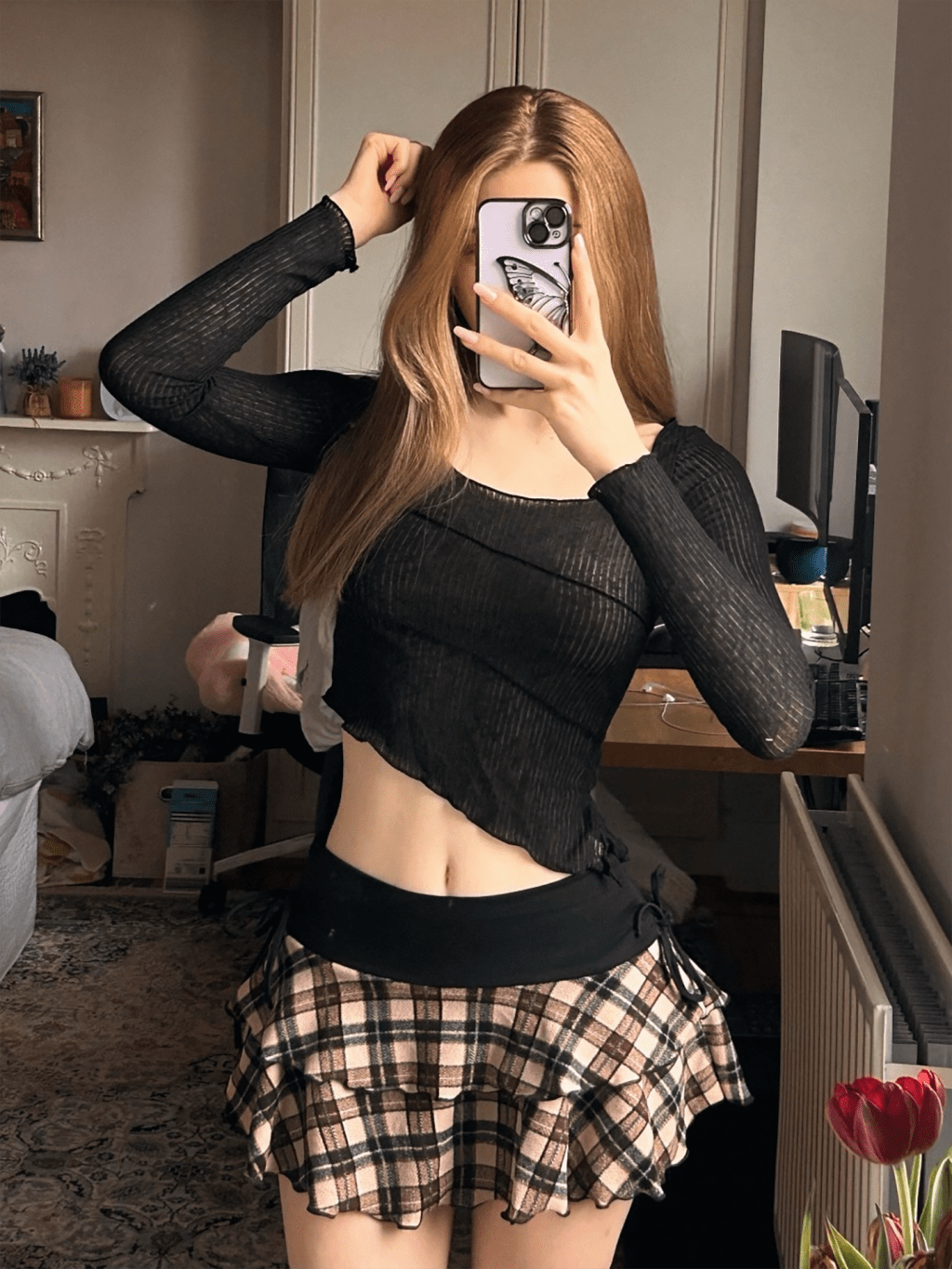
I wanted to talk about fashion and clothing in general, without excluding a male audience. I hope you enjoy this format; happy reading.
We sexualized an article of clothing and made women responsible for how others see them.
I’m talking about the miniskirt.
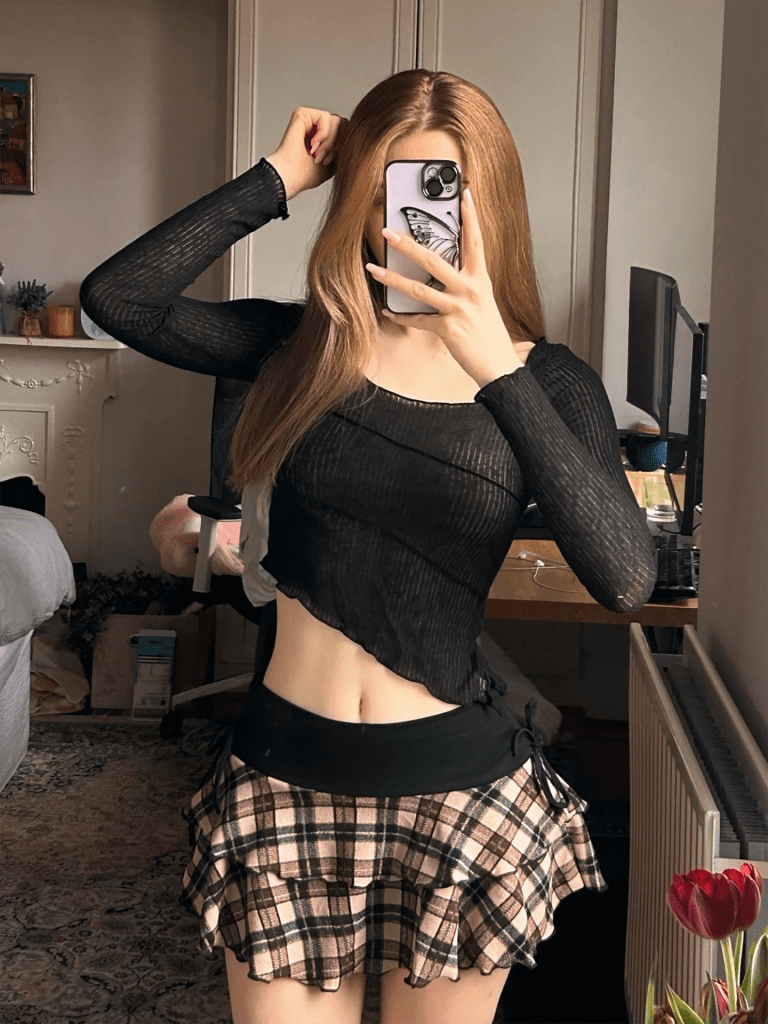
It’s a powerful symbol of:
- Freedom
- Scandal
- Emancipation
Freedom
In the 1960s, a British designer dared to shorten skirts above the knee: Mary Quant. She wanted women to be able to run, dance, and simply live life to the fullest. She named her creation the Miniskirt in homage to her favorite car, the Mini Cooper. However, some also say that the French designer André Courrèges contributed to this revolution. In reality, the miniskirt doesn’t have a single originator; it was born from a movement.
Very quickly, the miniskirt invaded the streets of London, then the entire world.
Why?
Because it arrived right in the heart of the 1960s, a time of upheaval.
- Sexual liberation
- Women’s rights
- Rejection of norms
It wasn’t the miniskirt that liberated women, but it made their freedom visible.
Scandal
But be warned, the miniskirt also caused a scandal.
- In Spain, under Francisco Franco, it wasn’t banned, but it was made clear that it had no place there.
- In the United States, girls were expelled from school, not for what they had done, but for what they were wearing.
- And even in the United Kingdom, some parliamentary debates touched on public decency.
It wasn’t a question of fashion; it was a question of control—control of:
- Image
- Body
- Women’s role in society.
Yet, it wasn’t the skirt itself that was the problem, but the freedom it represented. Wearing a miniskirt wasn’t about showing your legs; it was about refusing to let others decide for you.
But, at the end of the 1960s, something changed.
Emancipation
The miniskirt was everywhere: in the streets, among young people, in popular culture. That’s precisely where some major fashion houses, like Dior, started offering longer skirts.
Why?
Not just for aesthetic reasons, to regain control of fashion. Because haute couture operates in cycles, it must constantly offer something new to remain influential. When everyone adopts a trend, it loses its power. So, skirts are lengthened, lines are changed, and what is elegant is redefined. To gain a kind of coherence, but also a kind of authority.
Except that, this time, it doesn’t go unnoticed. Some women refuse; they protest. Because for them, it’s not just a trend that’s being replaced, but a freedom that’s being redefined.
But over time, the miniskirt has also become sexualized.
Not because of its inherent qualities, but because of the way it was perceived. In the 1960s and 70s, the media, advertising, film, and so on, began to associate the miniskirt with seduction, even provocation.
It was no longer seen simply as a practical and liberating garment; it was seen as legs, a body, an object of desire.
Little by little, the meaning changed. It was no longer “she dresses for herself” but “she shows off her body,” and this shift is profoundly political. Because it allows for a shift in responsibility.
It’s no longer the gaze that is questioned; it’s the woman who becomes guilty of what she wears.
But today, it’s regaining its power, because ultimately, the miniskirt isn’t about length; it’s about choice. To wear it, or not to wear it, but above all, to decide for oneself.
Hugs and kisses, see you soon!
 Orchid's Whims
Leave a comment