

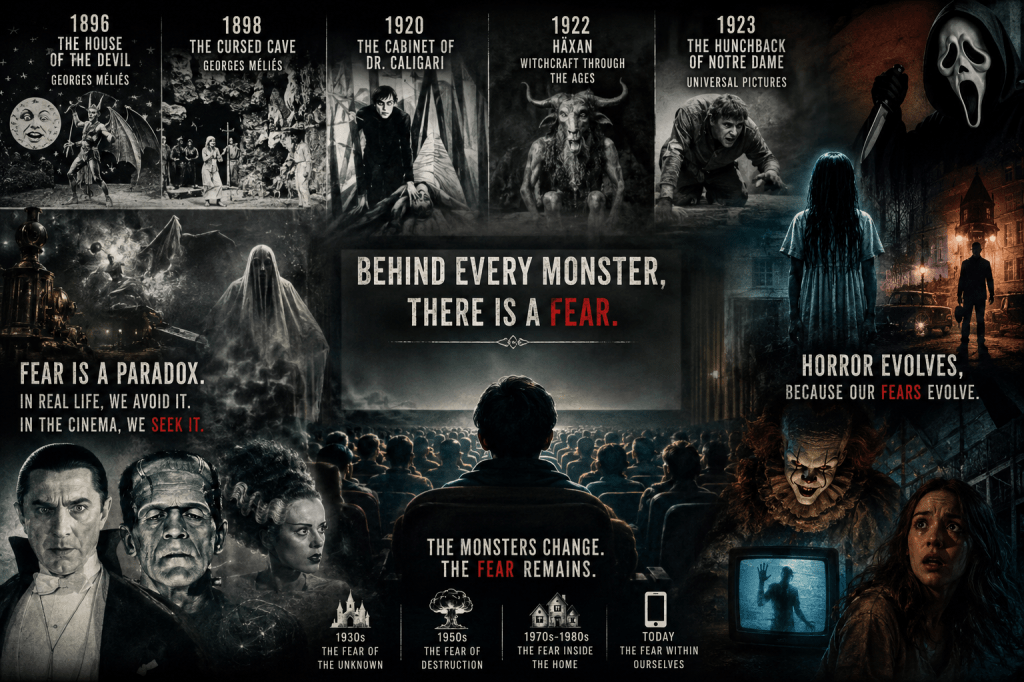
Fear, alongside laughter and sadness, is one of the fundamental emotions at the heart of every story, regardless of the medium through which it is told. It’s no coincidence that the origins of horror cinema can be traced back to the very birth of filmmaking itself, with pioneering filmmaker Georges Méliès directing The House of the Devil (1896) and The Cursed Cave (1898).
Determining what truly qualifies as the first horror film in cinema history, however, remains a matter of debate.
Many historians argue that Méliès’ films belong more to the realms of fantasy and the supernatural than to horror. According to that view, it wasn’t until the early 1920s that audiences witnessed the first real explosion of filmmaking built around fear.
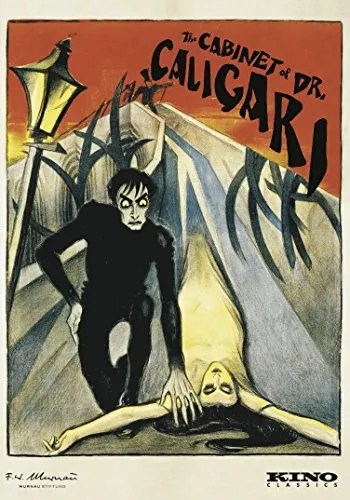
In 1920 came the release of The Cabinet of Dr. Caligari, a landmark of what would become known as German Expressionism. With its dark surrealism and atmosphere heavier than a Michael Bay screenplay, the film laid the first real foundations for horror as a cinematic genre.
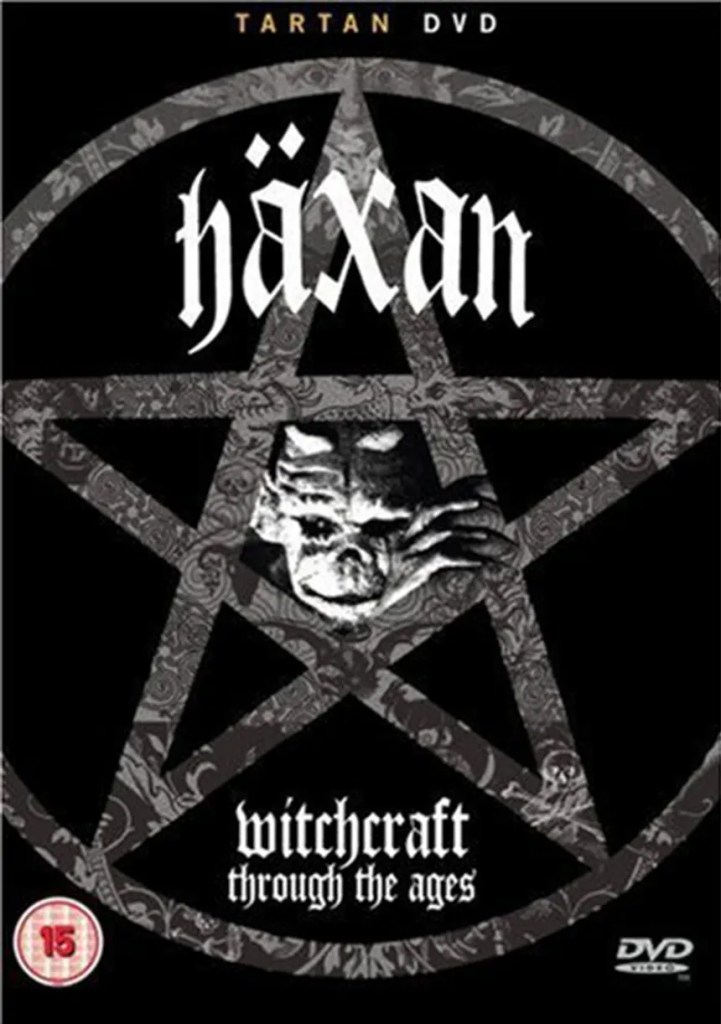
Then, in 1922, audiences discovered Häxan, also released under the title Witchcraft Through the Ages. This Swedish-Danish production played a crucial role in shaping the occult imagery and visual language that would define horror cinema for decades.
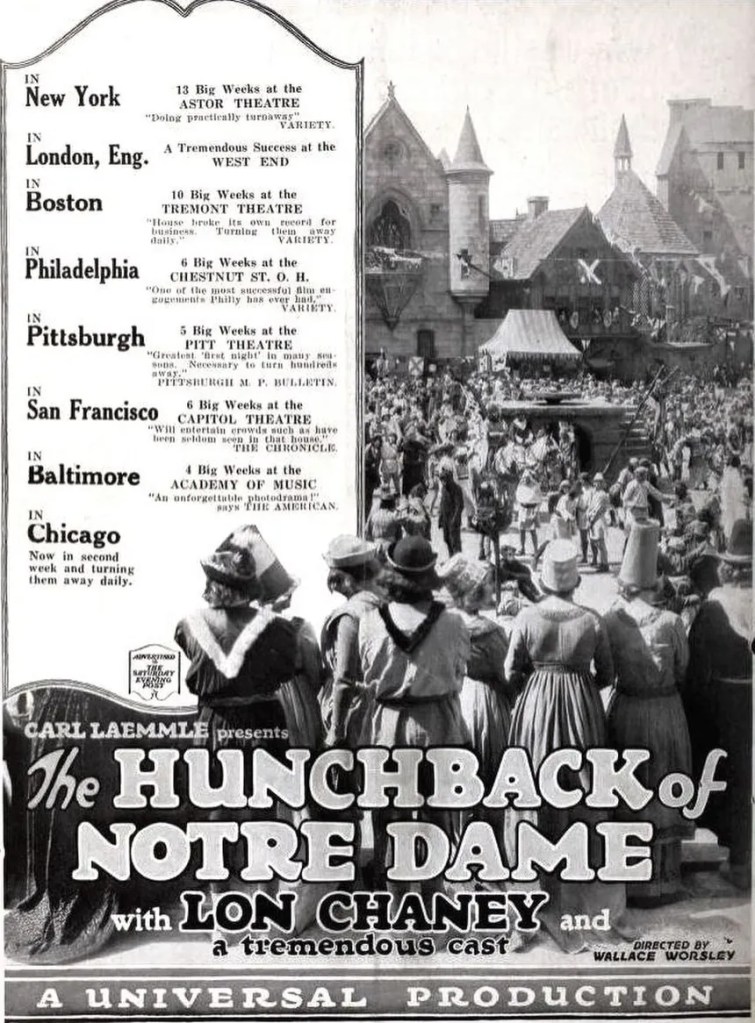
In 1923 came The Hunchback of Notre Dame. Produced by Universal Pictures, it marked the beginning of what would later become America’s famous cycle of classic monster movies—a tradition that would eventually be carried forward by Hammer Film Productions.
In the span of barely four years, the spark that ignited horror cinema had been lit.
And after that… the snowball kept rolling.
The difficulty in pinpointing the exact birth of horror cinema reveals something important: horror is surprisingly difficult to define. But more than the genre itself, it’s fear as an emotion that proves elusive.
Once this turbulent birth was over, horror cinema never stopped evolving. Yet what’s fascinating is that monsters, ghosts, and serial killers have always been little more than excuses. The true subject of horror has never been the monster itself.
It has always been fear.
Fear is a paradoxical emotion. In real life, we do everything we can to avoid it. In movie theaters, we willingly pay to experience it. Why? Because the darkened theater offers us something unique: we know we’re safe. Our brain, however, agrees to play along. Our heart rate increases, our muscles tense, our breathing becomes shorter. For a few moments, our body reacts as though the danger were real, even while our rational mind knows perfectly well that it isn’t.
That contradiction is what gives cinema its extraordinary power. Unlike a book, where readers control the pace of the experience, or a video game, where players directly influence events, a film dictates its own rhythm. The director decides the exact moment a floorboard creaks, when silence settles in, or when a creature finally emerges from the darkness. Fear becomes an experience orchestrated with almost musical precision.
And that’s where perhaps the biggest misconception about horror cinema lies. Many people still reduce the genre to jump scares. But the jump scare is only one tool among many—and certainly not the most interesting one. Great horror isn’t about making audiences jump every few minutes. It’s about creating lasting tension. It builds anticipation, unease, and the persistent feeling that something, somewhere, isn’t quite right.
That tension relies on a remarkably simple psychological mechanism: our imagination is often far more terrifying than anything shown on screen. When the camera lingers on an empty hallway, when a door remains slightly open, or when a character stares at something outside the frame, the audience instinctively fills the empty space with its own fears. By leaving part of the threat unseen, the filmmaker turns the viewer’s imagination into an active participant in the storytelling.
This is also why the fears represented in horror films constantly evolve with society. Monsters are never random. They reflect the anxieties of their time.
During the 1930s, gothic creatures such as vampires and mad scientists embodied fears of the unknown and the rapid progress of science. After the Second World War, nuclear anxiety gave rise to giant monsters and alien invasions. The 1970s and 1980s shifted horror closer to home, placing terror within ordinary families and suburban neighborhoods. Today, horror increasingly explores psychological trauma, loneliness, social media, and the unintended consequences of new technologies.
In many ways, horror cinema functions as a cultural barometer. It reveals what each generation would rather leave unspoken. Behind every ghost lies grief. Behind every demon, guilt. Behind every apocalypse, a very real fear. Horror doesn’t create our anxieties—it simply gives them a visible form.
Perhaps that is the true power of fear in cinema. It doesn’t exist merely to make us scream or look away. It forces us to confront, within a safe environment, emotions we usually spend our lives trying to avoid. When the credits roll, the monster disappears. But the questions it represented often remain with us long after we’ve left the theater.
Ultimately, the greatest horror films aren’t the ones with the most blood or the most spectacular creatures. They’re the ones that understand the real monster isn’t always on the screen. Sometimes it’s hidden in our imagination, in our memories, or within the universal fears that every generation shares. And perhaps that’s why, more than a century after its earliest beginnings, horror cinema continues to fascinate us just as much as it frightens us.
Hugs and kisses, see you soon!


Leave a Reply